Ice carving tools live a harder life than most of the equipment in a workshop. They spend hours wet, they work in the cold, they get dragged through slush and grit, and then they sit in the back of a van until the next commission. A chainsaw that carves a swan on Saturday and sits damp until Thursday is already on its way to a stiff chain and a pitted bar. The good news is that the fix is small and boring: a short routine, done consistently, at the end of every session.
Think of it as fifteen minutes of insurance. Not a deep restoration project, not a workshop overhaul — just a clean, dry, oiled, sharpened tool going back into its place. What follows is the checklist we use between carves, in the order it makes sense to do it.
Rinse, Then Dry Properly
Carving ice throws up a fine slurry of meltwater and grit, and that slurry is what does the damage. Rinse every working surface with clean water before you put anything away — not the grey puddle you've been standing in all afternoon. Pay particular attention to the places the slurry hides: the bar groove, the sprocket cover, the chain rivets, the inside of a gouge, the collar of a chisel where the blade meets the handle.
Then dry it. Wipe with a towel, then let the tool air out where air can actually reach it. A closed plastic tub is a humidity trap; a tool left in one will be rust-flecked by morning. Separate blades and bits so they aren't lying against each other in a wet heap. A blast of compressed air through a die grinder's collet and a chainsaw's cooling fins saves a lot of fiddling with a rag.
One thing worth knowing: cold tools sweat. Bring an ice-cold chainsaw straight into a warm kitchen and condensation will bead on every metal surface within minutes. Let tools come up to room temperature first, then do your final dry and oil pass.
Edge Care: Little and Often Beats Big and Rare
A dull tool is a dangerous tool. It skates, it grabs, it needs force where it should need almost none, and force on ice is how hands end up in the wrong place. Sharpening a little at the end of every session keeps edges in a range where a few passes on a stone is all it takes.
Chisels, Gouges and V-Tools
Check the bevel with your eye against a light source. If you can see a bright line along the cutting edge, it's dulled or slightly rolled. A few strokes on a diamond stone at the existing angle brings it back, and a strop finishes the job. Match the maker's grind rather than inventing your own; most ice chisels sit somewhere in the region of a 20–30 degree bevel, and changing that by hand on a stone usually creates more work than it solves. Never sharpen a chisel by grinding the flat back — that's your reference surface.
Chainsaws
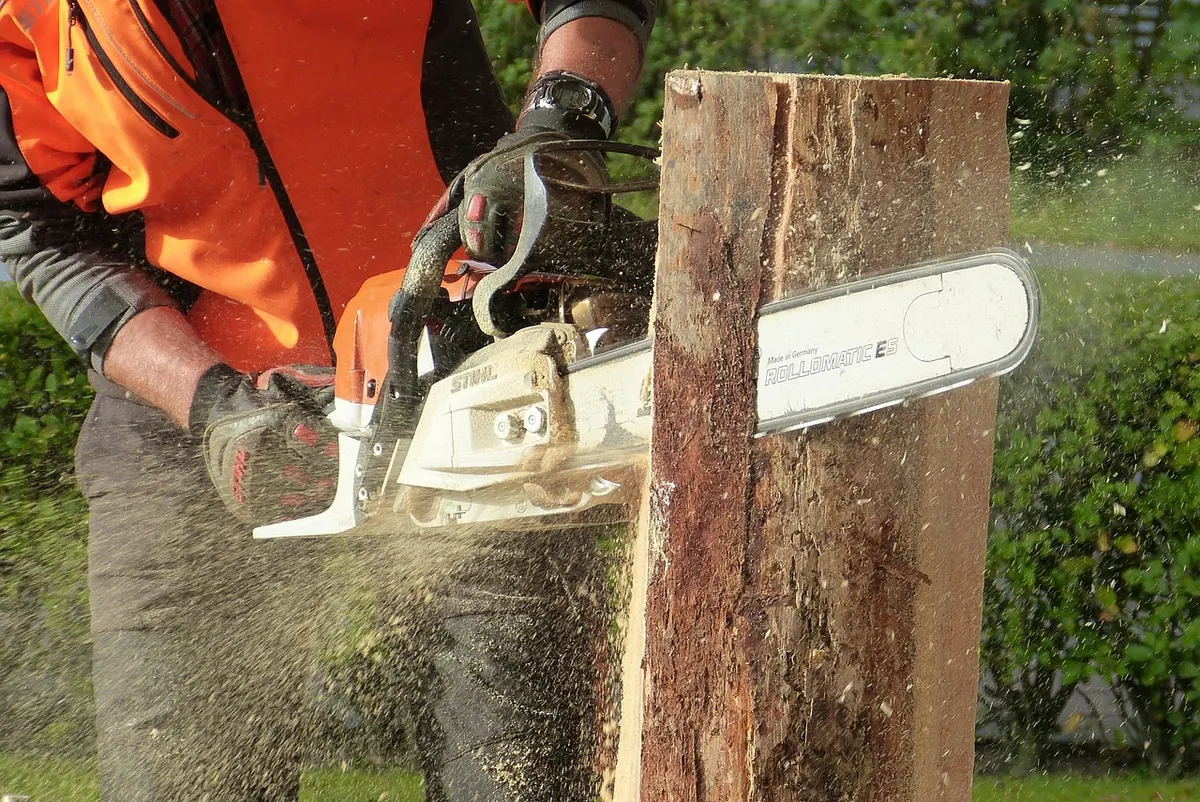
File the chain while it's still on the bar and the bar is clamped, with the correct round file for the pitch and a guide to hold the angle. Two or three strokes per cutter, same count on both sides, and the saw will cut straight instead of pulling to one side. Check the depth gauges every few sharpenings and take them down a touch with a flat file. Clean the bar groove with a thin scraper, check the oil holes are clear, and flip the bar over occasionally so it wears evenly.
Rust Is the Quiet Enemy
Carbon steel carving tools will flash with rust overnight in a damp van. Once pitting starts on a bevel, you'll be grinding metal away for months to get back to a clean edge. A thin film of oil on every metal surface is the simplest defence — light machine oil, camellia oil, or a dedicated rust-preventive wipe. Thin is the point. Heavy grease traps grit and makes the next session sticky and unpleasant.
- Oil blades and bits, but never the wooden handles.
- Wipe the bar and chain lightly after filing; a dry chain rusts fast.
- Keep a couple of rechargeable silica gel packs in your tool case and dry them out periodically.
- Don't store tools directly on a concrete floor — it holds moisture and pulls it into steel.
Storage That Protects Instead of Hiding
How tools are stored matters as much as how they're cleaned. A five-gallon bucket is where edges go to die. What you want is a case or roll with individual slots, so nothing knocks against anything else.
- Fit a guard to every edged tool. Split PVC pipe, a length of garden hose slit down one side, or a folded strip of dense foam all work.
- Lay chisels and gouges blade-down or blade-in-slot, never loose against a saw bar.
- Hang or rack chainsaws so the bar isn't resting on anything that will dull the chain.
- Keep the case in a spot with a stable temperature — a heated workshop corner rather than a shed that freezes and thaws.
- Store files and rasps separately; they dull each other when they rub.
The Two-Minute Check Before You Start
Maintenance isn't only an end-of-session job. A quick pass before you touch ice catches the things that would otherwise show up at the worst moment, halfway through a block with a client watching.
- Run a thumb lightly across each edge — across, never along. Any drag means a touch-up.
- Check chain tension: snug against the bar, still able to be pulled a little by hand.
- Confirm bar oil is topped up and flowing.
- Look for cracks at the handle-blade junction and any mushrooming on the head of a struck tool.
- Check cords, plugs and strain reliefs on electric saws and grinders.
Know When to Repair and When to Retire
Some wear you can fix; some you shouldn't try to. A loose handle can usually be re-seated and re-wedged. A chipped edge can be re-ground. But a splitting wooden handle, a bent blade, a cracked collet, or a chain with broken or badly worn cutters belongs in the bin or with a repair shop, not back in the case. Mushroomed heads on struck tools should be dressed down with a grinder or replaced — that flared metal can spall, and it's a genuine hazard.
The Routine That Pays for Itself
End every session the same way: rinse, dry, oil, sharpen, guard, store. Fifteen minutes, in that order, while the tools are still out and your hands are already cold. It's not glamorous work, and nobody will compliment your maintenance routine at a festival. But the carver whose chain still bites cleanly in February, whose gouges don't need a re-grind every third carve, and whose hands stay away from a skating blade is almost always the one who did this quietly at the end of every session. Set the habit now and the tools will hold their edge through a whole season.
Photo: stevepb / Pixabay